Commercial Mold Remediation
Commercial Mold Remediation in San Luis Obispo that keeps your doors open
When moisture turns into mold behind your walls, Commercial Mold Remediation in San Luis Obispo is what protects your lease, your staff, and your inventory. We handle offices, retail, restaurants, and warehouse space across San Luis Obispo County with containment, HEPA air scrubbers, and moisture mapping that finds the source, not just the stain. Crews work nights and weekends so your commercial mold removal San Luis Obispo CA job never costs you a day of revenue.
Service overview
What Commercial Mold Remediation in San Luis Obispo actually involves
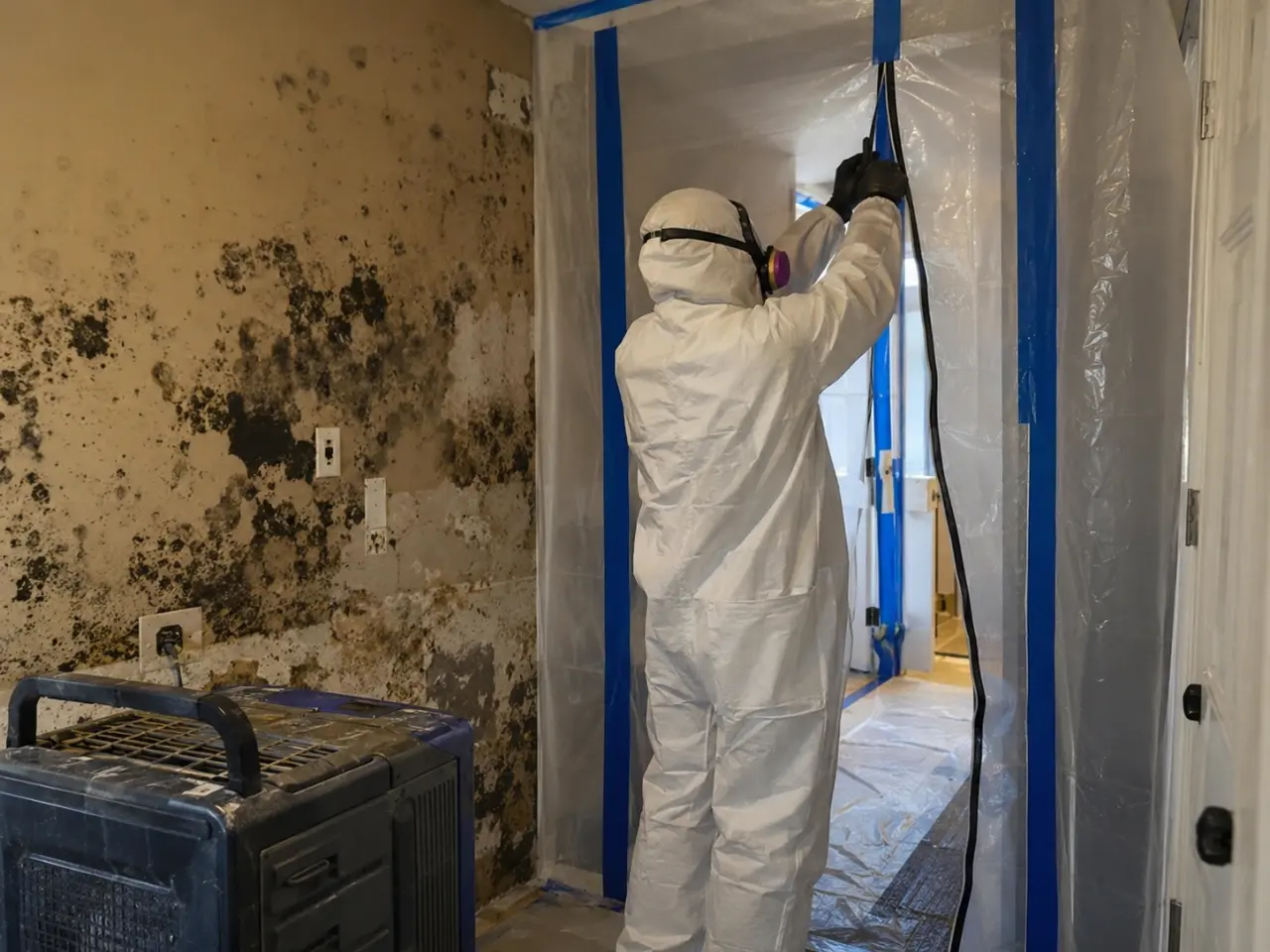
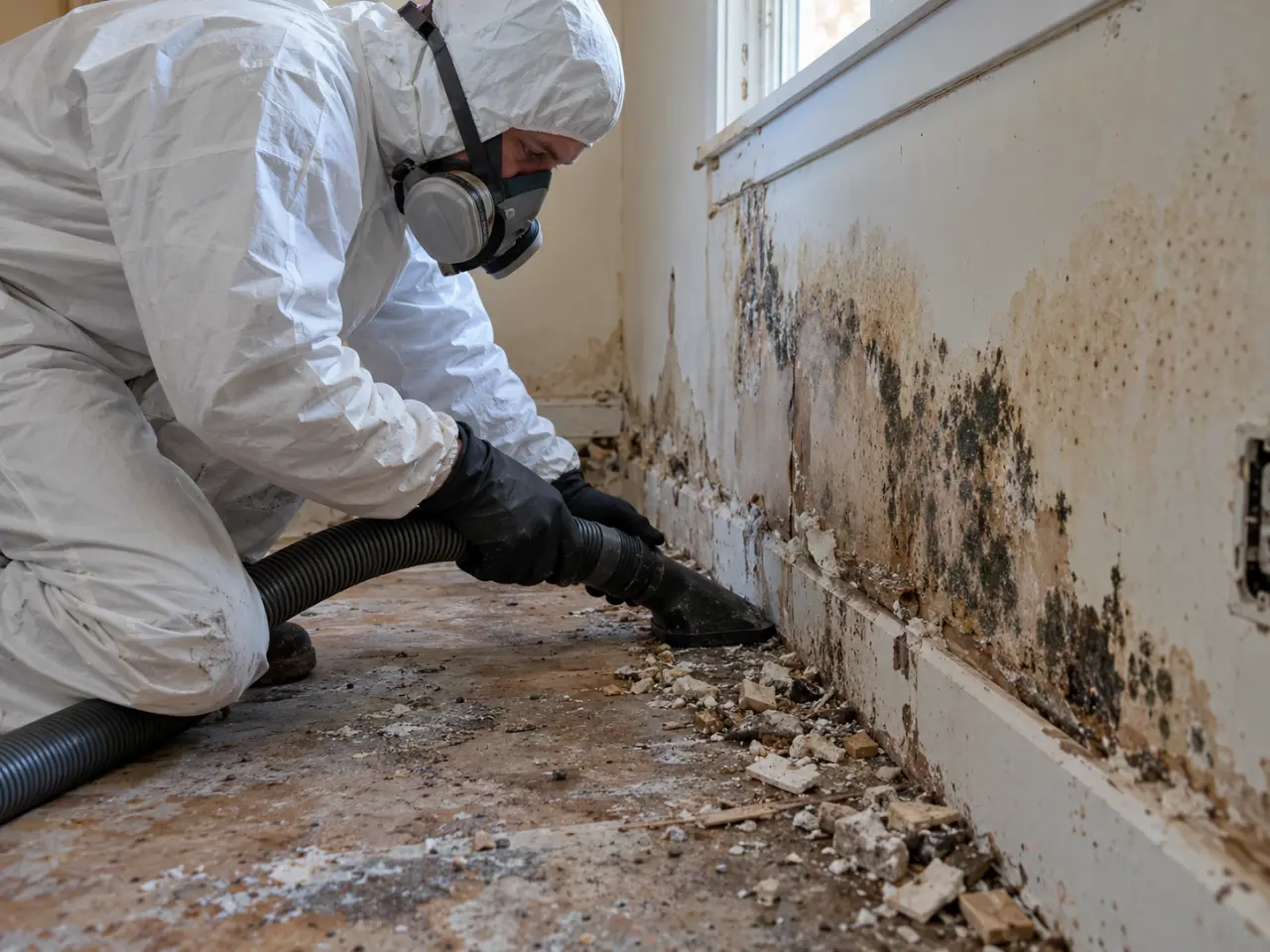
Commercial Mold Remediation in San Luis Obispo is the controlled removal of mold growth, contaminated building materials, and the moisture conditions that fed it inside a business property. It is not a bleach wipe-down. We build polyethylene containment, run negative air machines to keep spores out of occupied space, and remove porous materials that cannot be saved. Every job follows the ANSI/IICRC S520 Standard for Professional Mold Remediation, with moisture readings logged before, during, and after.
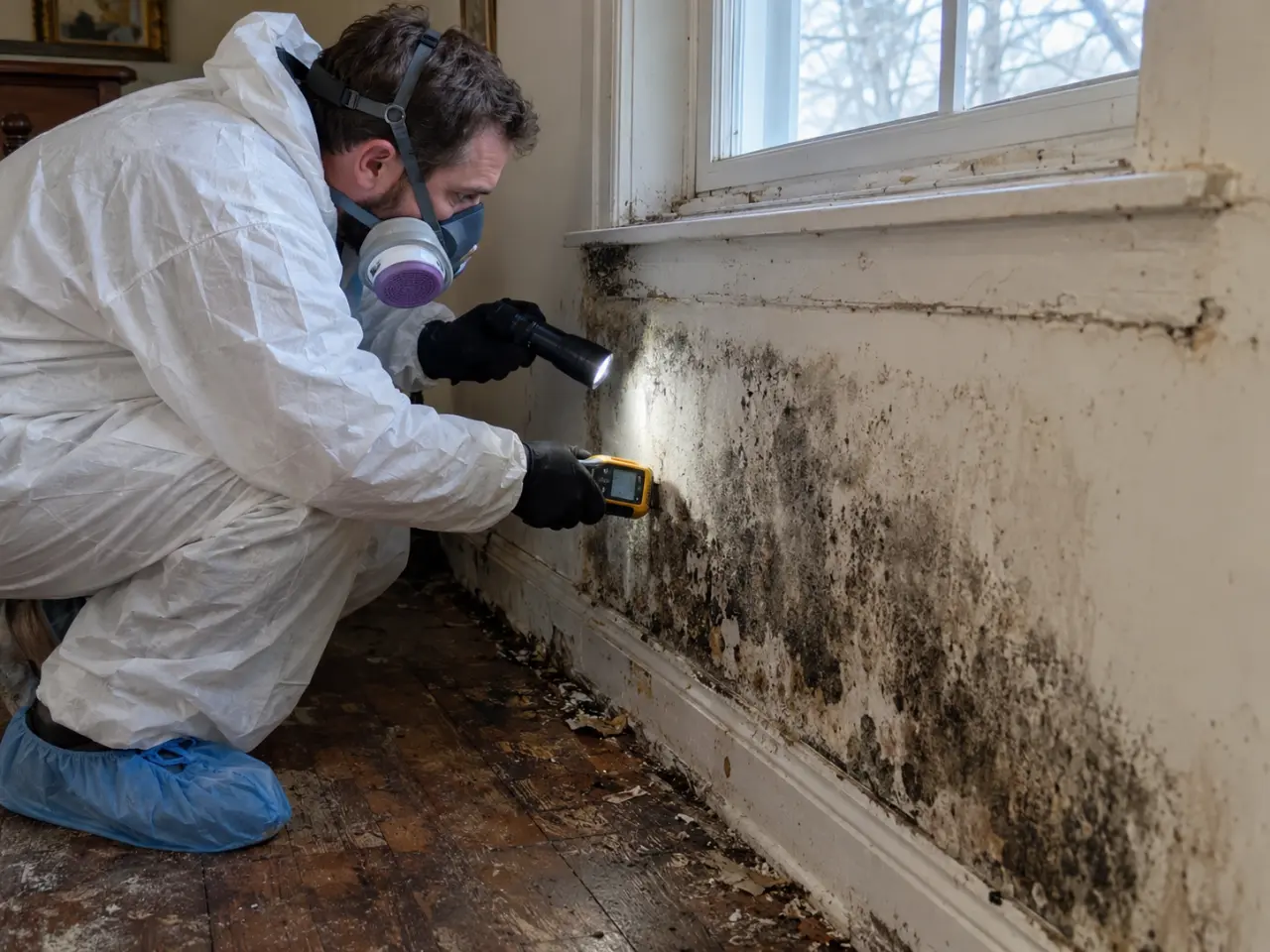
San Luis Obispo businesses sit in a coastal fog belt that pushes indoor humidity past 60% for weeks at a time, and many downtown and Railroad District buildings are 40 to 80 years old with original plumbing and unvented crawlspaces. One slow supply-line drip behind a breakroom wall is enough to grow black mold contamination in 48 to 72 hours. If you are searching for commercial mold removal near me in San Luis Obispo, we start with an infrared thermal camera and a Protimeter moisture meter to map the wet zone.
Practical benefits
Why businesses hire us for mold cleanup
Mold in a commercial building is a liability problem before it is a cleaning problem. These are the outcomes our clients care about most, and the numbers behind them.
Revenue stays protected
We schedule containment build and demolition for nights and weekends, so a typical 2,000-square-foot office suite is back in service by Monday at 7 a.m. Your staff never loses a shift, and your customers never see a containment wall.
Documented for landlords
Every business mold cleanup San Luis Obispo project ends with moisture logs, daily air sampling pump readings, and photo documentation. That packet satisfies property managers, insurers, and commercial lenders who want proof the building was dried to standard.
Source fixed, not just stained
Removing visible growth without stopping water intrusion guarantees mold recurrence after incomplete drying. We trace the leak with a hygrometer and thermal imaging, repair or refer the source, then verify with a third-party clearance test before we pull containment.
Air quality you can defend
HEPA air scrubbers and negative-pressure ducting run continuously until spore counts drop. For restaurants and clinics, that means you can show health inspectors and staff that the space met a documented clearance threshold, not just that it looked clean.
How service works
Our commercial mold removal process, step by step
Five stages, each with a defined deliverable. You get a written scope before we start and a clearance report when we finish.
STEP 01
Inspection and mapping
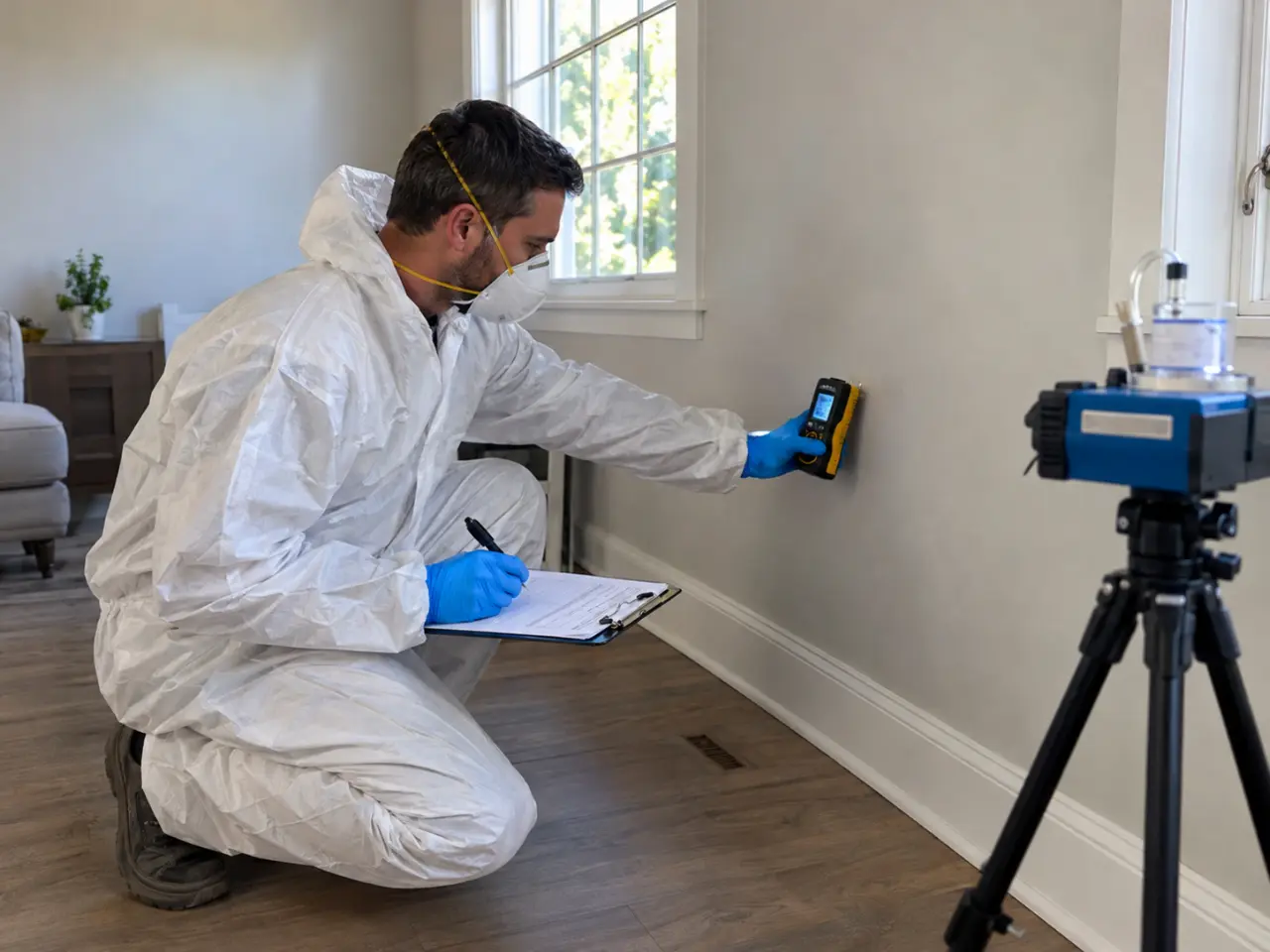
A certified technician walks the property with a moisture meter, hygrometer, and FLIR infrared thermal camera. We map elevated readings on a floor plan and identify the water intrusion source. Most commercial inspections take 60 to 90 minutes and you get findings the same day.
Tools and methods
Tools and methods we use
FLIR infrared thermal camera
Finds temperature differentials behind walls and above ceilings so we can locate hidden mold growth and wet zones that a visual inspection would miss.
Protimeter moisture meter and hygrometer
Measures structural moisture content and ambient humidity. We log readings twice daily and dry until structural materials read at or below 15%.
HEPA air scrubber and negative air machine
Filters airborne spores and keeps containment under negative pressure. XPOWER and Abatement Technologies units run continuously until clearance testing passes.
LGR dehumidifier and Dri-Eaz air movers
Low-grain refrigerant dehumidifiers pull moisture out of the air while air movers evaporate it from wet building materials. This is what prevents mold recurrence after incomplete drying.
Air sampling pump
Collects spore samples for third-party lab analysis. The results are the clearance benchmark we hand to your insurer, landlord, or health inspector.
HEPA vacuum and antimicrobial cleaner
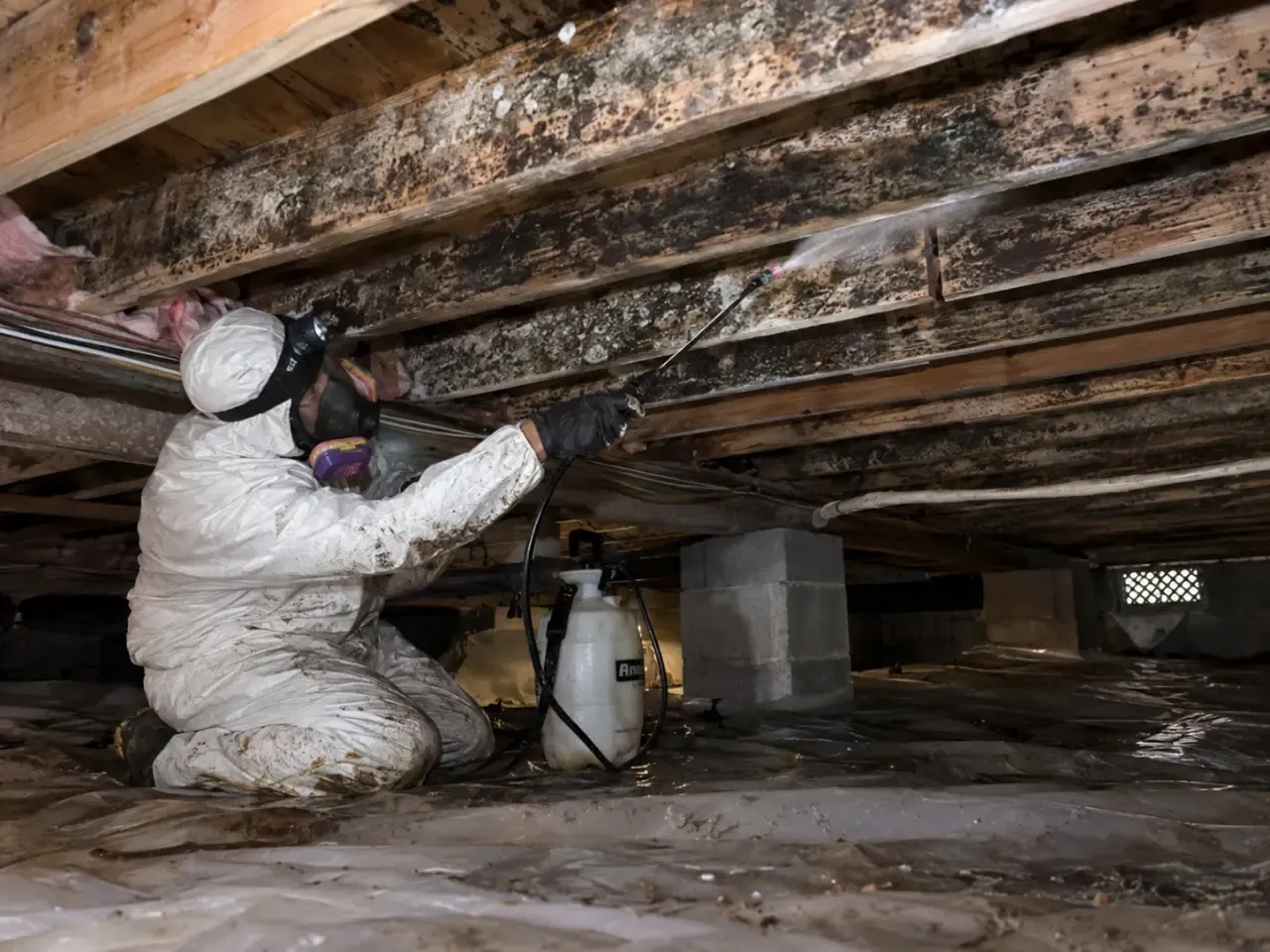
Removes settled spores from exposed surfaces after demolition, then treats framing to inhibit regrowth. Technicians wear P100 respirator filters during this phase.
ANSI/IICRC S520 Standard for Professional Mold Remediation
The industry standard we follow on every commercial job. It defines containment requirements, removal procedures, and the documentation needed to prove a building is clean. Following it is what makes a clearance report defensible.
Negative-pressure containment
Polyethylene containment sheeting with zipper doors, paired with negative air machines and negative-pressure ducting, keeps spores inside the work zone. Occupied areas maintain clean airflow throughout the project.
Moisture mapping and source tracing
We map every elevated reading on a floor plan and trace it back to the water intrusion source, whether that is a supply line, roof leak, condensate drain, or elevated indoor humidity. Removing mold without fixing the source guarantees it returns.
Third-party clearance testing
An independent air sampling pump test confirms spore counts are back to outdoor baseline before we pull containment. You get the lab report in your final packet, which is what insurers and landlords ask for.
Where this service fits
When San Luis Obispo businesses call us
A Downtown San Luis Obispo restaurant finds mold behind the walk-in cooler after a slow refrigeration drain leak.
We build containment after closing, remove contaminated drywall and insulation, HEPA vacuum the framing, and run LGR dehumidifiers overnight. The line is repaired and the wall closed with mold-resistant drywall within four days. The restaurant reopens the next morning with no lost service days and a clearance report for the health file.
A Foothill warehouse notices a musty smell near pallet racking months after a roof leak was patched.
Thermal imaging reveals three wet zones the patch missed. We remove saturated insulation, dry the slab to 12%, and treat the framing with antimicrobial cleaner under negative pressure. Spore counts return to outdoor baseline, and the client signs up for quarterly moisture checks to catch the next leak early.
A Laguna Lake medical office gets a tenant complaint about moldy odors in an exam room.
Inspection finds black mold contamination on the back of the drywall from a condensate line drip. We run after-hours containment, replace the drywall, and install a vapor barrier in the adjacent crawlspace. Clearance testing passes before the next clinic day, and no patient appointments are cancelled.
A Broad Street retail space floods from a failed water heater over a holiday weekend.
We extract water, remove wet carpet and baseboard, and run Dri-Eaz air movers and LGR dehumidifiers for four days. Moisture readings are logged twice daily and shared with the landlord. The space is dry, mold-free, and back to selling within a week, with documentation that satisfies the property owner.
Local execution
How commercial mold remediation runs in San Luis Obispo
San Luis Obispo commercial buildings sit in a coastal fog belt, and that changes how we work. From May through September, indoor humidity in Downtown San Luis Obispo and Railroad District buildings climbs past 60%, condensation forms on cold pipes, and mold can colonize a wall cavity in 48 to 72 hours. Many commercial properties here were built between 1940 and 1980 with unvented crawlspaces, galvanized supply lines, and plaster walls that hold moisture longer than modern drywall. We adjust drying times accordingly, often running LGR dehumidifiers an extra day on plaster. For a commercial mold remediation San Luis Obispo CA for offices project, we also coordinate with property managers on access, parking, and after-hours noise limits. If you are comparing commercial mold abatement cost San Luis Obispo quotes, ask whether the bid includes crawlspace vapor barrier and clearance testing. Ours does.
Downtown San Luis Obispo
Dense commercial blocks with shared walls and older plumbing. A leak in one suite can wick into the neighboring unit, so we inspect both sides of the wall.
Railroad District
Restaurants and breweries with high interior moisture loads. Kitchen exhaust and refrigeration condensate lines are the two most common mold sources we find here.
Foothill
Warehouse and light industrial space on slab construction. Roof leaks and slab moisture are the dominant issues, and thermal imaging is essential to find them.
Laguna Lake
Medical and professional offices where air quality complaints trigger fast action. We prioritize after-hours scheduling so patient-facing space stays open.
Broad Street
Retail corridors with older HVAC systems. Ductwork can distribute spores across multiple tenant spaces, so we inspect the air handler on every job.
Coastal fog and elevated indoor humidity from May through September
Interior humidity above 60% feeds condensation on cold surfaces. We add dehumidification capacity and recommend vapor barriers in crawlspaces to keep readings down year-round.
Commercial buildings from 1940 to 1980 with unvented crawlspaces
Crawlspace moisture migrates up through flooring and wall cavities. We treat the crawlspace as part of the remediation zone, not a separate problem.
Plaster and lath walls in older Downtown and Railroad District buildings
Plaster releases moisture slowly, so drying takes one to two days longer than modern drywall. We extend dehumidifier runtime and log readings until the wall reads at or below 15%.
Shared-wall commercial suites in dense blocks
Moisture and spores cross property lines. We inspect adjacent suites and document conditions on both sides so landlords and tenants have a clear record.
Problems we solve
Commercial mold problems we solve in San Luis Obispo
Most commercial mold calls start the same way: a smell nobody can place, a stain on a ceiling tile, or a tenant complaint. Here is what we find and how we fix it.
Hidden mold growth behind walls and above ceiling tiles
We use a FLIR infrared thermal camera and Protimeter moisture meter to find wet zones that are invisible from the floor. Containment goes up before demolition, and negative air machines keep the rest of the building clean while we open the wall. Spores circulate through your HVAC system and reach every room in the building. Staff start reporting headaches and allergies, and a tenant complaint can trigger a health department visit.
Moldy odors that return after cleaning
We trace the moisture source first, whether it is a failed supply line, roof leak, or elevated indoor humidity from coastal fog. Then we remove contaminated materials, dry the structure to 15% or below, and verify with clearance testing. Surface cleaning without fixing water intrusion means mold recurrence after incomplete drying. You pay twice and lose credibility with tenants who thought the problem was handled.
Elevated indoor humidity in coastal buildings
We install vapor barriers in crawlspaces, recommend LGR dehumidification for high-humidity zones, and set up quarterly moisture checks. Prevention costs a fraction of a repeat commercial mold abatement in San Luis Obispo. San Luis Obispo fog season pushes indoor humidity past 60% for weeks. Condensation forms on cold pipes and exterior walls, and that film is enough to feed mold growth across an entire floor.
Wet building materials after a plumbing failure
We extract standing water, remove unsalvageable materials, and run Dri-Eaz air movers and LGR dehumidifiers until readings drop. Structural drying starts the same day we inspect whenever scheduling allows. Drywall, insulation, and carpet stay wet for days after a leak. Mold can colonize within 48 to 72 hours, and by the time you smell it, the contamination has spread past the original leak point.
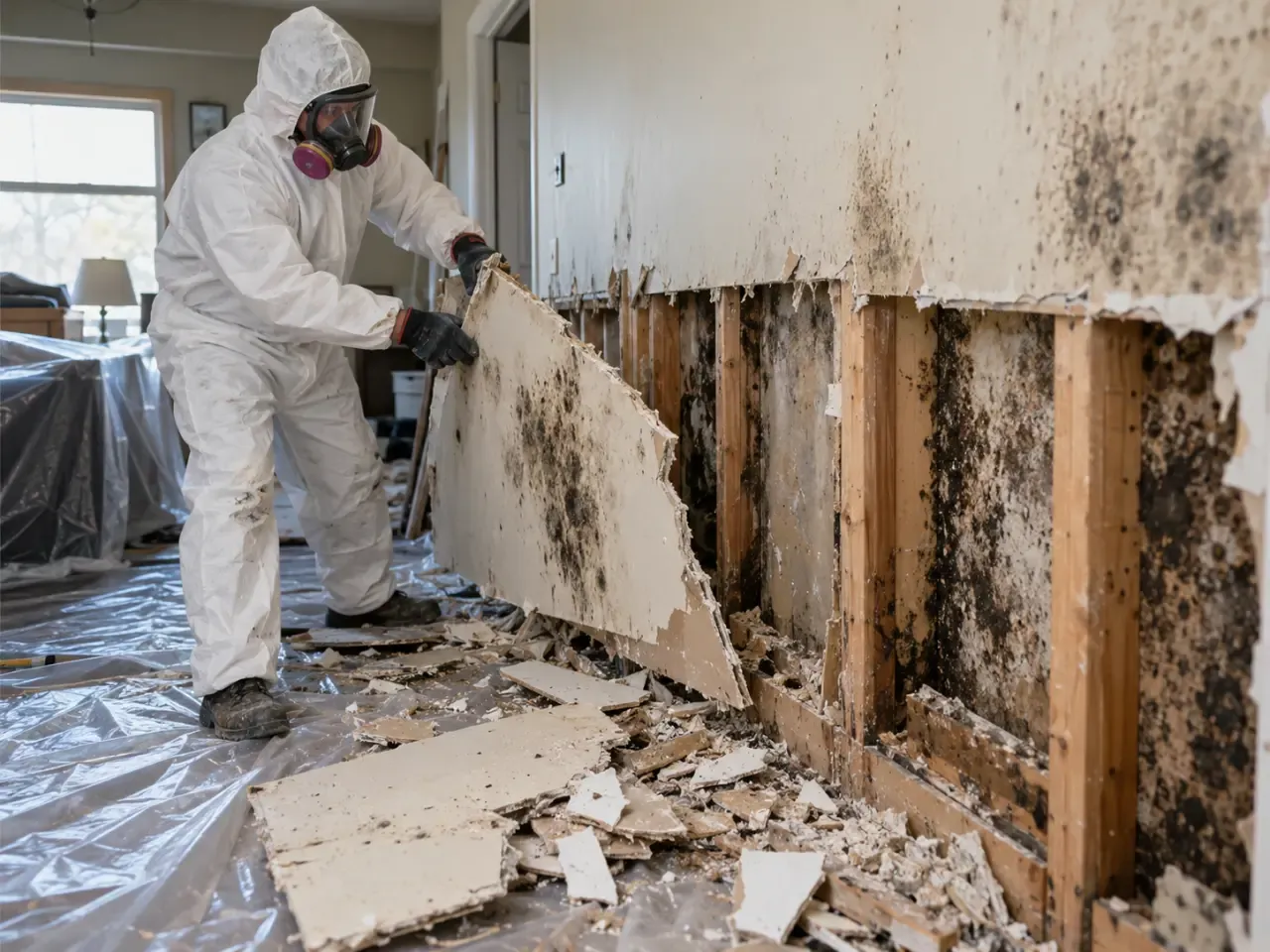
A practical standard for every visit.
Clear planningPrepared arrivalsCareful workLocal follow-through
Experience in the details
Six years of Central Coast mold work
San Luis Mold Pros has been remediating commercial property in San Luis Obispo County since 2020. Our technicians hold IICRC Applied Microbial Remediation Technician, IICRC Water Damage Restoration Technician, and IICRC Applied Structural Drying credentials, and our remediators are trained to ACAC Council-certified Microbial Remediator standards. We work under California contractor licensing requirements and follow the EPA Renovation, Repair and Painting Rule on any pre-1978 building. That matters in a city where half the commercial stock predates 1980.
- IICRC Applied Microbial Remediation Technician on every commercial project
- IICRC Water Damage Restoration Technician and Applied Structural Drying certified crews
- ACAC Council-certified Microbial Remediator level training and oversight
- EPA Renovation, Repair and Painting Rule compliance on pre-1978 buildings
- Documented drying logs and third-party clearance testing on every job
Where we work
One local team. A lot of ground covered.
Laguna LakeSinsheimerJohnson AvenueFoothillMadonnaDowntown San Luis ObispoRailroad DistrictBroad Street
Check my address Most commercial mold abatement cost San Luis Obispo projects land between $2,800 and $18,000 in 2026, with a typical 2,000-square-foot office suite running $4,500 to $8,000. Price depends on square footage, how many materials are contaminated, whether containment needs to protect occupied space, and whether reconstruction is included. We give you a written scope and flat number before any containment goes up.
San Luis Mold Pros does, and we have served San Luis Obispo County since 2020 from our base on the Central Coast. We handle offices, restaurants, retail, warehouses, and multi-unit commercial property from Laguna Lake to the Railroad District. Call (805) 507-9326 and we will schedule an inspection, usually within 24 to 48 hours.
Yes. After-hours business mold cleanup San Luis Obispo is most of what we do for commercial clients. We build containment after your last employee leaves and run HEPA air scrubbers and dehumidifiers overnight. A single-room job can be sealed and finished before your next opening. Larger projects get phased so at least part of your space stays usable.
Containment and negative air pressure are the two biggest levers. We isolate the work zone with polyethylene sheeting, keep it under negative pressure with a negative air machine, and route HEPA-filtered exhaust away from occupied areas. We also stage demolition in phases and schedule noisy work around your operating hours. Most clients keep serving customers the entire time we are on site.
Keep exploring
Related Services
Your next step is waiting
Get Commercial Mold Remediation in San Luis Obispo scheduled today
We are licensed, insured, and have served San Luis Obispo County since 2020. Call (805) 507-9326 and we will book an inspection, usually within 24 to 48 hours, with after-hours containment available the same week.
Start with the basics
Contact San Luis Mold Pros
Call (805) 507-9326 or email [email protected] and we will get you on the schedule. We answer the phone 24/7 for water intrusion emergencies and return messages within one business hour during the day. Estimates are free and we serve all of San Luis Obispo County.